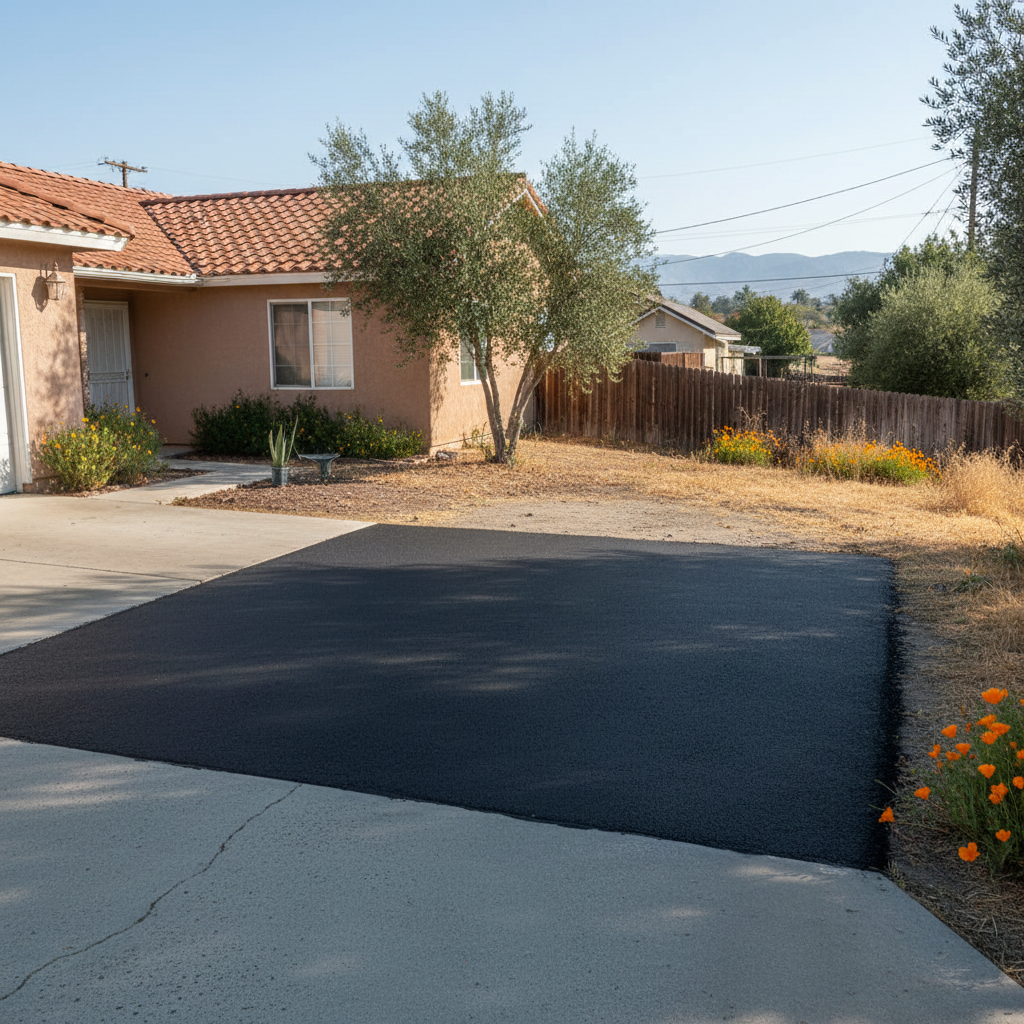
So, you've got a pothole or some serious cracking in your asphalt. It's an eyesore, a trip hazard, and if you ignore it, it's only going to get worse and more expensive. You're probably wondering, "What's this going to set me back?"
Look, there's no single magic number, but I can give you a pretty good idea of what to expect for asphalt patching here in Murrieta. I've been doing this for a long time, and I've seen it all, from small driveway repairs to massive commercial parking lot overhauls.
What Makes Asphalt Patching Cost What It Costs?
A few key things really drive the price up or down. It's not just about the size of the hole, believe it or not.
- Size and Depth of the Damage: This is obvious, right? A small, shallow pothole is cheaper than a large, deep section that needs a full-depth repair. We're talking about square footage, but also how much material we need to dig out and replace.
- Type of Patching Method: Are we doing a simple skin patch, a saw-cut and remove patch, or a full-depth repair? A skin patch is basically just filling the hole and compacting it – it's the cheapest but also the least durable. Saw-cut and remove means we cut out a neat rectangle around the damage, dig it out, and replace it. Full-depth is for really bad areas where the base is shot, and we have to rebuild from the ground up. Each method has its own labor and material costs.
- Material Costs: Asphalt isn't free, and the price fluctuates. Plus, there's the aggregate, binder, and any tack coat we might need.
- Accessibility: Can we get our equipment in there easily? If it's a tight spot, or we have to work around a lot of traffic or obstacles, that adds time and labor.
- Prep Work Required: Sometimes the area around the patch needs extra cleaning, crack filling, or even some minor grading before we can lay down new asphalt.
- Permits: For larger commercial jobs, or if you're dealing with city property, you might need permits. That's an extra cost and can add time.
Typical Cost Ranges for Asphalt Patching in Murrieta
Alright, let's get down to some real numbers. These are general ranges, but they'll give you a solid starting point.
- Small Pothole (1-5 sq ft): For a basic saw-cut and remove patch, you're probably looking at a minimum charge of around $250-$500. We have to cover mobilization, crew time, and materials even for a small job.
- Medium Patch (5-20 sq ft): For a section like a small driveway repair or a few connected potholes, expect to pay anywhere from $150-$250 per square foot. So, a 10 sq ft patch could be $1,500-$2,500. This often involves more extensive saw-cutting and base repair.
- Larger Areas (20+ sq ft): As the area gets bigger, the per-square-foot cost usually comes down a bit due to economies of scale. You might see prices in the $10-$20 per square foot range for larger, more straightforward sections, especially if it's part of a bigger project. For a 100 sq ft patch, that could be $1,000-$2,000.
- Skin Patches: If it's just a surface fix for a very shallow area, it's cheaper, maybe $5-$10 per square foot, but I don't recommend these for anything but the most temporary fixes. They don't last.
Remember, these are for actual repairs, not just pouring cold patch from a bag. We're talking hot asphalt, proper compaction, and a repair that's meant to last.
What Should Be Included in Your Quote?
When you get a quote from Classic Asphalt Co. or any reputable contractor, it should be clear about what you're getting.
- Site Preparation: This includes clearing debris, cleaning the area, and marking out the repair.
- Excavation/Demolition: Removing the old, damaged asphalt and any compromised base material.
- Base Repair: If the sub-base is unstable, we'll address that. This is crucial for longevity.
- Tack Coat: A sticky liquid asphalt applied to the edges of the existing pavement and the base to help the new asphalt bond.
- Hot Mix Asphalt: The actual asphalt material, laid at the specified depth.
- Compaction: Using rollers and vibratory plate compactors to ensure the patch is dense and smooth.
- Cleanup: Hauling away debris and leaving the site tidy.
Make sure your quote specifies the depth of the new asphalt and the type of patching method. If it's vague, ask questions.
How to Avoid Overpaying for Asphalt Patching
Nobody wants to get ripped off. Here's how to protect your wallet:
- Get Multiple Bids: Always get at least three detailed quotes. This helps you compare apples to apples and understand the market rate.
- Be Specific: Clearly explain the problem and what you want fixed. If you're vague, contractors might quote different scopes of work.
- Ask for References: A good contractor will have plenty of happy customers. Check them out.
- Verify Insurance and Licensing: Especially important for commercial jobs. You don't want liability falling back on you.
- Understand the Warranty: How long is the work guaranteed? What does it cover?
- Don't Always Go for the Cheapest: The lowest bid often means corners are being cut. A patch that fails in a year isn't a good deal. For example, in Murrieta, our soil can be expansive in some areas, so a contractor who understands proper base prep for our local conditions is worth paying a little extra for.
Patching is usually more cost-effective than letting a problem spread and needing a full overlay or replacement. Address those issues early, and you'll save yourself a headache and a lot of cash down the road.